 PaperPicks.
No public prediction market strategy reliably prints money. The documented edges are favorite-longshot bias (longshots overpriced, favorites underpriced), deep-NO junk-bond grinding, maker pricing that cuts or eliminates fees, and news-speed advantages inside one niche you genuinely know. Fees decide whether any of them survive, and most retail traders still lose. Test any strategy against 50 paper trades on PaperPicks before it touches money.
Search "prediction market strategies" and you get two genres: motivational fluff and course sales. This page is the third. Everything below made somebody money in public, has a source you can check, and gets an honest accounting of what it costs to run. The baseline first: roughly three quarters of retail prediction-market traders lose money. A prediction market trading strategy, at retail size, is mostly the art of not joining them. If prices as probabilities still feel new, read how prediction markets work before any of this.
Favorite-longshot bias: stop buying lottery tickets#
The most documented edge in these markets is a bias in how people price hope. Longshots win less often than their price implies, and favorites win slightly more often. Griffith first measured it at American racetracks in 1949, and the cleanest modern evidence is Snowberg and Wolfers, who examined all 6.4 million US horse starts from 1992 to 2001: betting every horse at 100/1 or longer lost about 61 cents on the dollar, while betting every favorite lost only 5.5. Their explanation, tested against the alternatives: people overweight tiny probabilities, exactly as prospect theory predicts. Nobody has to be dumb for the bias to exist; they just have to like lottery tickets a little more than arithmetic does.
Event contracts inherit the tilt. A 2025 study of more than 300,000 Kalshi contract prices found that buyers of contracts at 10¢ and under lost over 60% of their money, while contracts above 50¢ won a little more often than their prices implied (the accuracy evidence has the full numbers).
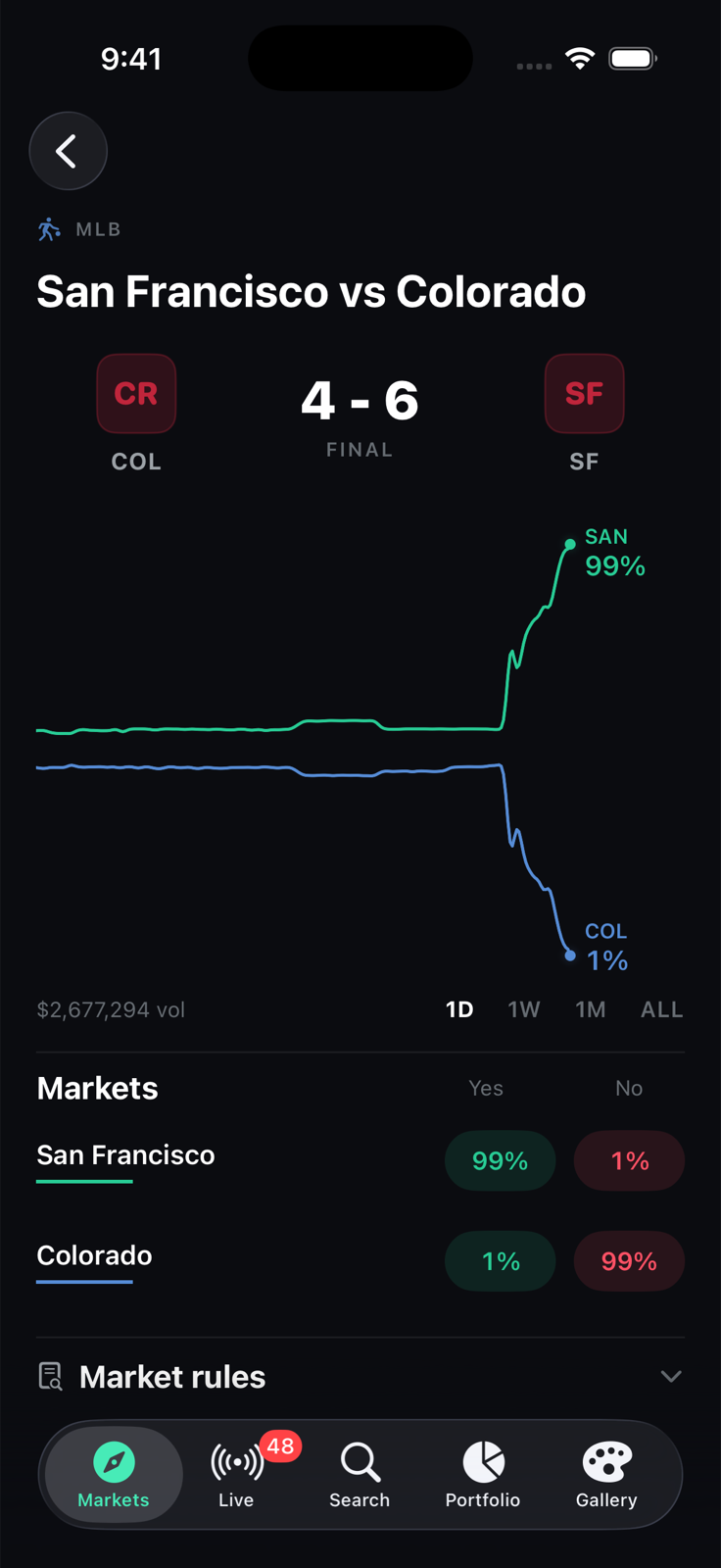
The strategy is unglamorous: be deeply skeptical of cheap YES contracts, and know that holding favorites carries a structural tailwind. The mistake funding it belongs to the 8¢ dreamer on the other side of the book. The catch is that the tailwind is a few points, not a business model. Spreads, fees, and one oversized loss can eat years of it, so it works best as a filter, not an income. The paper test is simple: log 50 trades, split them by price band, and watch which bands actually pay you.
The junk-bond grind: deep NO, compounded#
Buy near-certainties at 70 to 90¢, or the same trade from the other side, deep NO on longshots, in markets that resolve within days. Collect a boring 5 to 30% per trade and recycle it immediately. The documented run is a Medium profile of a Kalshi trader who turned about $1,000 into $200,000 in about four months: junk-bond positions at 70-90¢ where he judged the true probability at 95 to 99%, sized at 5 to 10% of bankroll, plus a smaller bucket of 25-60¢ trades in mention markets he had modeled, with total open risk capped near 30%.
Why does anyone sell certainty at a discount? Because the other side of your fill is usually the lottery-ticket buyer from the last section, plus impatient holders freeing capital early. Deep NO is favorite-longshot bias, industrialized.
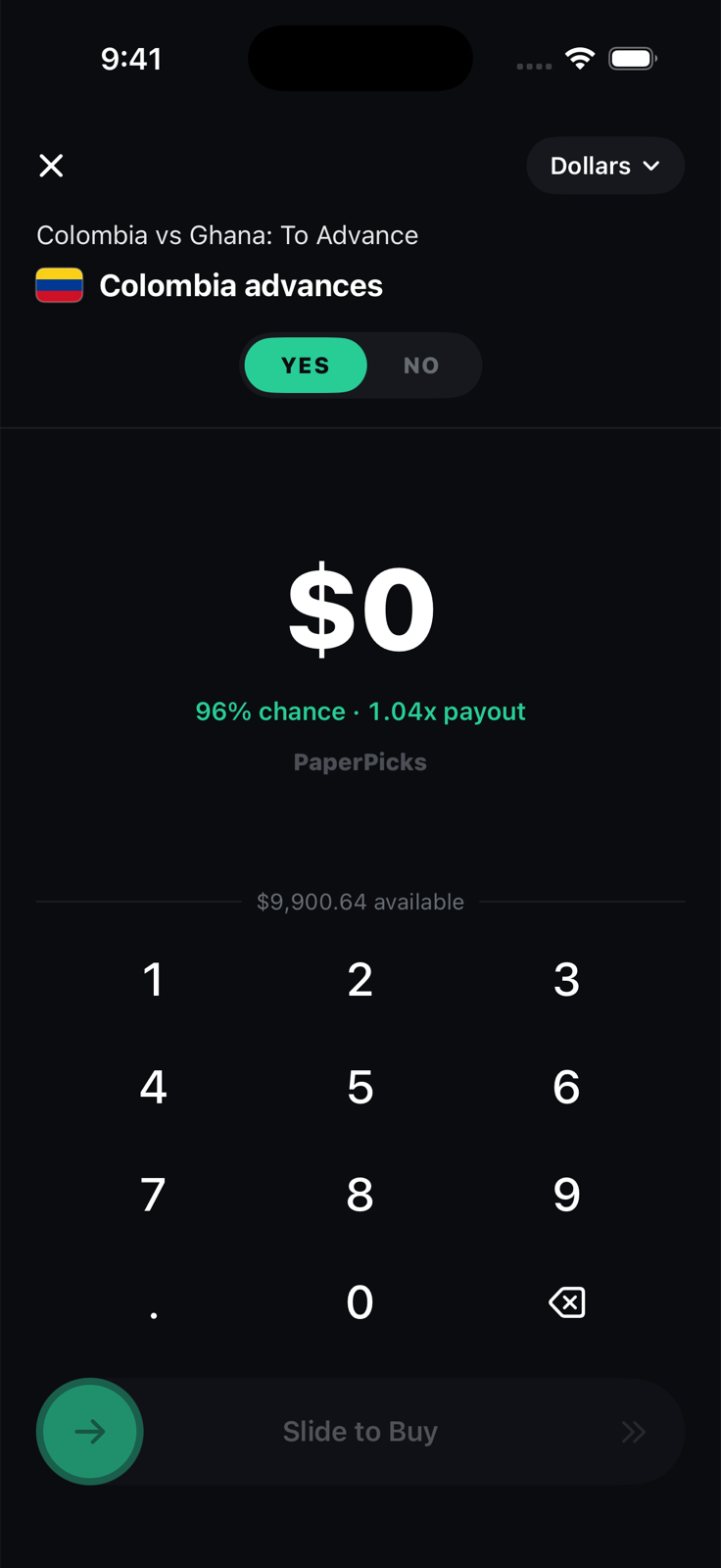
The catch has teeth. An 85¢ certainty that dies erases roughly six same-sized wins, and the profile is a survivor's story: he traded 12 to 14 hours a day and hit an exceptional run without the drawdown that would have ended the compounding. You are reading about the trader it worked for, not the ones it didn't. On paper, run the grind for 50 trades and check one number: whether the inevitable blow-up stayed smaller than the accumulated wins.
Every documented winner pairs a small edge with sizing discipline and unreasonable hours. The edge is the smaller half. If reading resolution rules for fourteen hours a day sounds like misery, that is useful information.
Be the maker: patience is a discount#
Decide what a contract is worth, rest a limit order at your price, and let someone impatient cross the spread into you. Both big venues charge the aggressor and go easy on resting orders; the venue notes below have the numbers. The edge exists because immediacy is a product: takers buy it on every trade, from whoever was already resting at a price chosen calmly in advance.
Two catches. Some orders never fill, and the market that runs away without you is always the one you were right about. Worse, fills are adversely selected: your resting order executes most eagerly when news you haven't seen yet makes your price wrong. Thin overnight books sharpen both edges: patient orders fill at prices that would never print at noon, and fast exits get punished. The discipline underneath is the strategy: if you cannot name a fair value to rest at, you do not have a trade, you have a mood. Reading odds properly comes first.
PaperPicks fills at the live price, so paper-test the discipline half: write your fair value down before opening the ticket, and trade only when the market is past your number.
Polymarket strategy: get paid to be patient#
Polymarket rebuilt its economics on March 30, 2026; any Polymarket strategy written earlier assumed a fee-free world and needs its math re-run. The current rules, per Polymarket's fee docs: takers pay a category-based fee that peaks near 50¢ (crypto is priciest, sports and politics cheaper), makers pay nothing and collect daily USDC rebates funded by taker flow, and geopolitics markets carry no fee at all.
That structure tells you what works on Polymarket's books. A resting limit order is subsidized twice over, no fee plus a rebate, so the maker approach pays better here than anywhere else. Category selection is a real decision now: a thesis you can express in a geopolitics market trades free. And depth is the venue's edge, with the deepest politics and world-events books anywhere, which is where news-speed trading needs size to get paid.
Two honest warnings. Offshore settlement runs through UMA's optimistic oracle, and disputed resolutions are a real tail risk for junk-bond positions: read the resolution text before selling certainty. And the regulated US app is a separate exchange with its own flat fee schedule; Kalshi vs Polymarket maps which one you are on.
Kalshi trading strategy: the fee table is the strategy#
Kalshi rewrote its fee schedule on July 7, 2026, and the headline: fees are product-dependent now. The general curve still charges takers 0.07 × price × (1 - price) per contract, peaking at 1.75¢ on a 50¢ contract (about 3.5% of the position) and shrinking to fractions of a cent at the extremes. But the formula now carries a per-series multiplier and some products get their own tables, so check the schedule for the market you actually trade. Maker fees default to zero, with the listed exceptions charged at a quarter of the general coefficient. Settlement costs nothing; exiting early pays a second trading fee, so trade like you mean to hold.
That math decides trades: a 2¢ edge on a 50¢ contract loses most of itself to the 1.75¢ taker fee, while the same order resting as a maker keeps the edge intact. The junk-bond zone is cheap by construction, since the curve collapses near the extremes, so fee-aware traders end up at exactly the prices the grind lives at.
Then there are parlays, which Kalshi has now. Combos rolled out through late 2025: pick legs, request a quote, and professional market makers price the bundle, take it or leave it. The structure makes you the taker on every combo; retail cannot quote. Sportico's analysis of the first four months of 2026 found retail traders risked about $800 million on custom combos and lost over $100 million of it, roughly 15 cents per dollar. The strategy note writes itself: unbundle. Trade the one leg you actually have a view on, and let someone else pay for the bundle.
News speed and specialization: the durable directional edge#
The top directional traders win by processing public information faster or more accurately than the crowd, inside a niche: Fed statement wording, injury reports, hurricane models, mention-market transcripts. The mistake funding this edge belongs to a consensus that has the facts but weighs them wrong, or has not read them yet. Nobody out-reads the crowd in every category at once. Specialization is the mechanism itself.
Aenews, a trader with over $3 million in lifetime prediction-market profit, told a July 2026 interview that his worst loss was $125,000 in February 2025 on a market about Kanye West launching a coin. He held NO when headlines said the launch was imminent, flipped to YES, and then the launch was postponed. Both sides, one market. His own takeaways: never re-rate on a single update, cap sizes, skip markets where you hold no edge, do not chase the loss. If chaos can shred a trader of that caliber, the amateur in the same moment is the donation. When you do not have the fastest read, wait for the dust.
The paper test: pick one niche and trade only that for a month, 25 settled positions, and compare against your trade-everything baseline.
How to make money on prediction markets#
Mostly, you do not, and an honest strategy page has to say so. Roughly three quarters of retail traders lose, the parlay cohort above gave back 15% of its stake in four months, and those losses fund the edges in this article. Two strategies that dominate leaderboards deserve a warning label too. Market making at scale is real and profitable, and it runs on institutional infrastructure and full-time monitoring you do not have. Copy-trading fails more subtly: you inherit the winner's drawdowns without the conviction that carried them through, and most copiers quit at the exact bottom the winner sat through. What the profitable minority shares is boring: one niche, maker pricing, favorites over lottery tickets, and position sizing that survives a bad week. The rest is avoiding the standard mistakes.
The strategies, side by side#
| Strategy | Edge source | Main risk | Fee sensitivity |
|---|---|---|---|
| Favorites over longshots | Crowd overpays for small probabilities | Thin tailwind, easily eaten by bad sizing | Low: fees shrink near price extremes |
| Junk-bond grind (deep NO) | Same bias, compounded across fast markets | One dead certainty erases many wins | Low per trade, multiplied by volume |
| Maker pricing | Takers pay for immediacy | Non-fills and adverse selection | Inverted: rebates on Polymarket, free on most Kalshi series |
| News speed in a niche | Faster reading of public information | Whipsaw in chaotic markets | Medium: speed means crossing spreads |
| Parlays and combos | None for you; the quoter prices the bundle | Compounding longshot pricing | High: you are the taker by construction |
| Copy-trading | Someone else's judgment | Their drawdowns without their conviction | Full taker fees on every mirrored entry |
Test it on paper before it tests you#
The filter is brutal in a useful way: a strategy that cannot survive 50 paper trades will not survive real money. That is what PaperPicks is for. It is a free iPhone prediction market simulator with live odds mirroring public markets, a $100 paper bankroll, real settlement, and no signup. The record is permanent and scored server-side, so a month of junk-bond grinding or maker discipline produces an honest number instead of a flattering one. Run the strategy, count the trades, and decide what kind of trader you are while the tuition is still free.
- Snowberg and Wolfers, Explaining the Favorite-Longshot Bias (NBER w15923) — the 6.4 million race dataset and the misperception evidence
- Kalshi fee schedule, July 7, 2026 update (PDF) — the general fee curve, per-series multipliers, and maker fee list
- Polymarket docs: Trading fees — category taker fees, maker rebates, and fee-free geopolitics
- Sportico: Kalshi retail bettors have lost $100M+ on parlays — the RFQ combo structure and the retail parlay loss data
- The Secrets of Polymarket Legends: Aenews interview (July 2026) — the six-figure both-sides loss and his risk rules
Facts checked against primary sources on July 24, 2026.